Check-up and cleaning
At a routine check-up we look at your teeth, gums and mouth, clean off the tartar and tell you when to come back.
- Visits
- One, 30 to 60 minutes
- Last updated
What it is
Tooth decay often causes no symptoms at first. That is why we usually find it at a check-up, and while it is still on the surface it can be stopped with fluoride, without a filling.
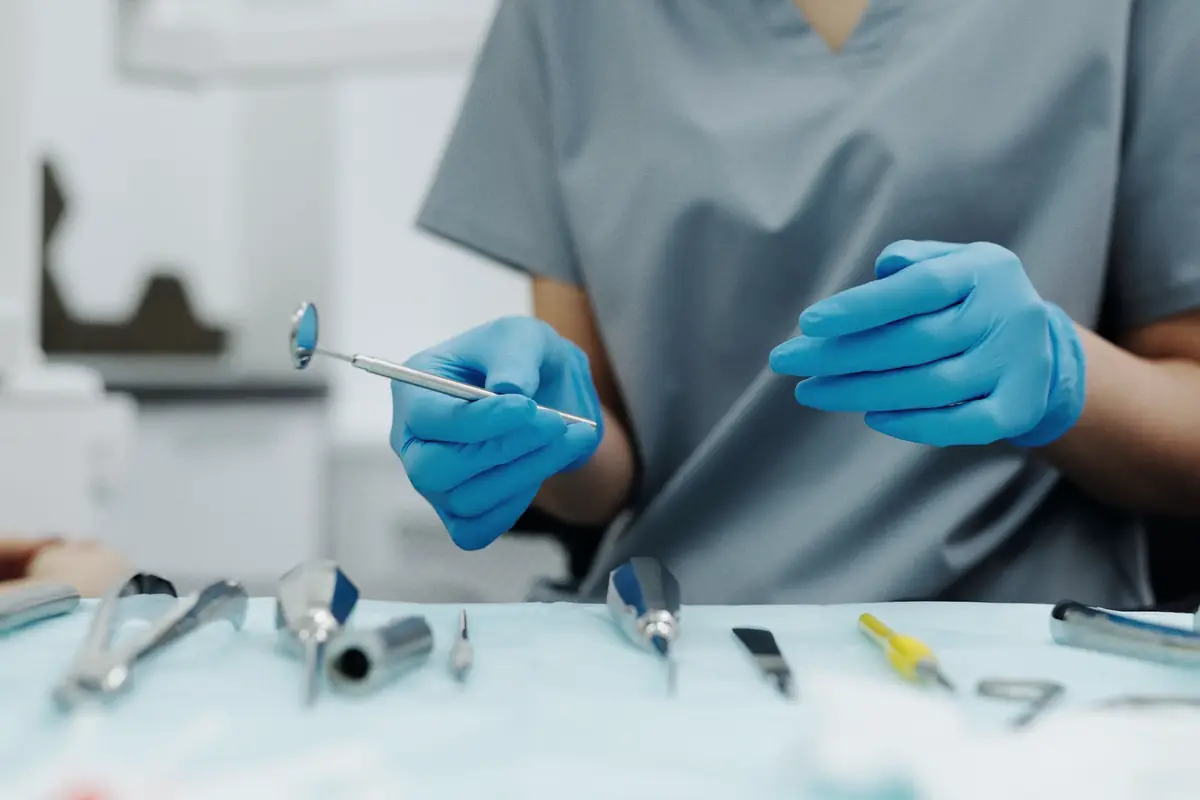
At a check-up we ask about your general health, examine your gums and the rest of your mouth, and talk about diet, smoking, alcohol and how you clean your teeth. At the same visit we remove plaque and tartar and polish your teeth, usually in 30 to 60 minutes.
Plaque left on the teeth irritates the gums and leads to gum disease. Do not wait for your next check-up if your gums bleed when you brush or eat hard food, if they are swollen, red and sore, or if a tooth is loose or aching: book an appointment sooner. The same, and urgently, for ulcers or red patches in your mouth, or a lump in your mouth or on your lip.
How it is done

We talk first
We ask about your general health and anything that bothers you in your teeth or mouth. If something has changed since last time, tell us.
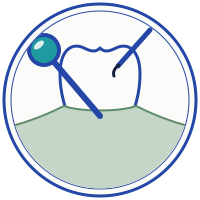
We examine your teeth, gums and mouth
We look at each tooth in turn, the gums around them and the rest of your mouth.
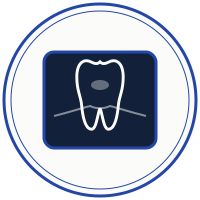
X-rays, if needed
You do not need them at every check-up. When you do, they show what the eye cannot; we tell you first what we want to see.
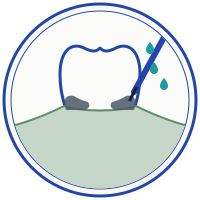
We remove plaque and tartar
With special instruments, and often with an ultrasonic one. You might hear scraping, but the cleaning should not hurt.
We polish
We polish your teeth with a soft rubber cup and a special paste.
How long it lasts
Every 6 months is not the rule for everyone. How often you need a check-up depends on how healthy your teeth and gums are. After each one we tell you when to come back: anywhere from 3 months to 2 years for adults, and at most 1 year for children and teenagers under 18.
What you will feel
During the cleaning you might hear scraping, but it should not hurt. If coming to the dentist makes you nervous, tell us at the start. If a spot is sensitive, raise your hand: we stop straight away and ask before going on.
Afterwards
- For a few days your teeth may feel sensitive and your gums a little sore; this usually goes away within a few days. If it bothers you, paracetamol or ibuprofen can help.
- We tell you what we found, and give you advice on diet, smoking, alcohol and cleaning your teeth.
- We agree on a date for your next check-up together.
- At home: brush twice a day with fluoride toothpaste, then spit without rinsing. Clean between your teeth every day.
Where the steps come from
The steps and the aftercare on this page follow these patient information pages.