The practice
Two dentists on the 2nd floor, in Rhodes New Town. Here you can see the rooms, how we clean the instruments, and what we do about X-rays.
Last updated:
The rooms
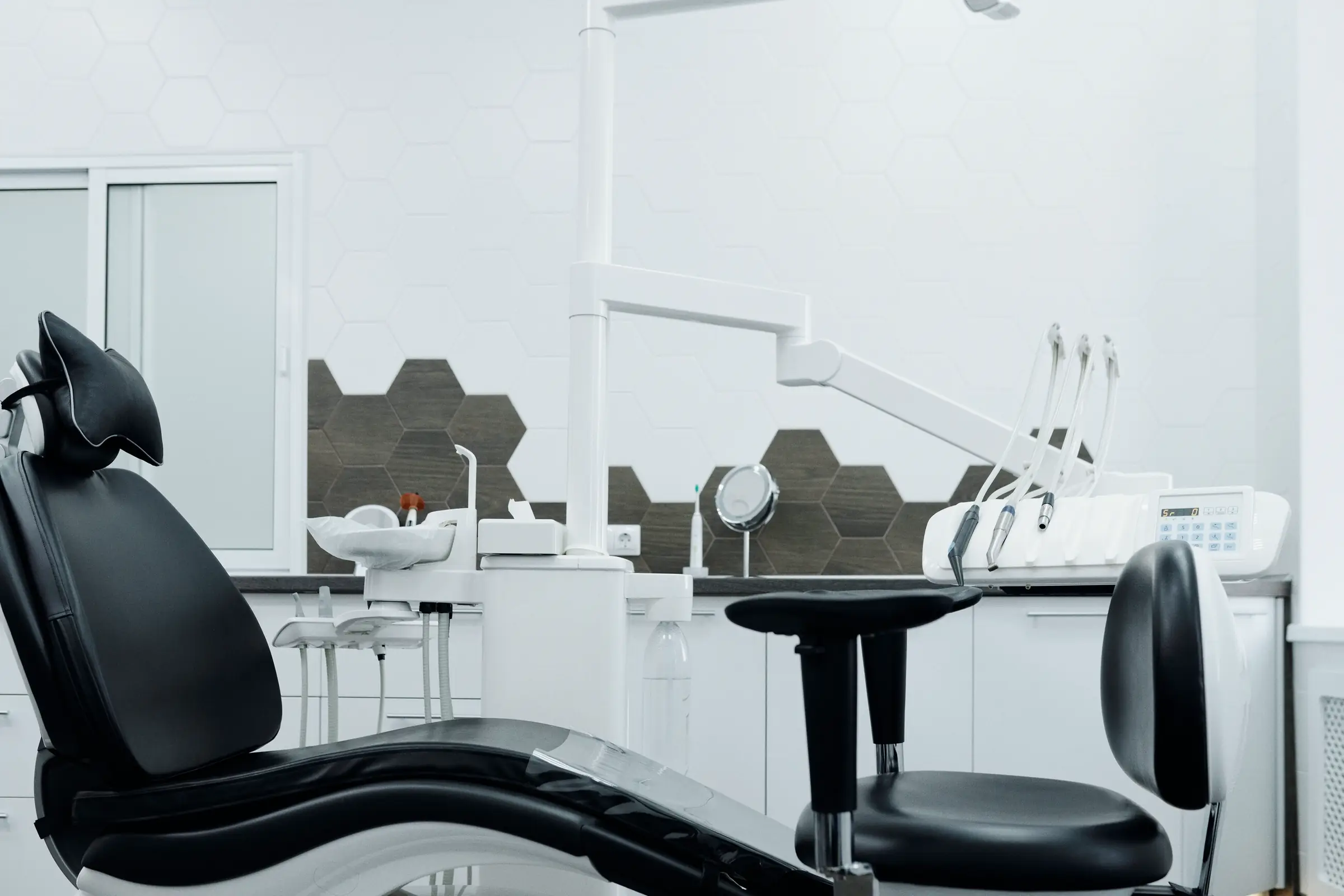
Reception is straight ahead as you come in. This is where you book and where you get your written treatment plan with the cost.
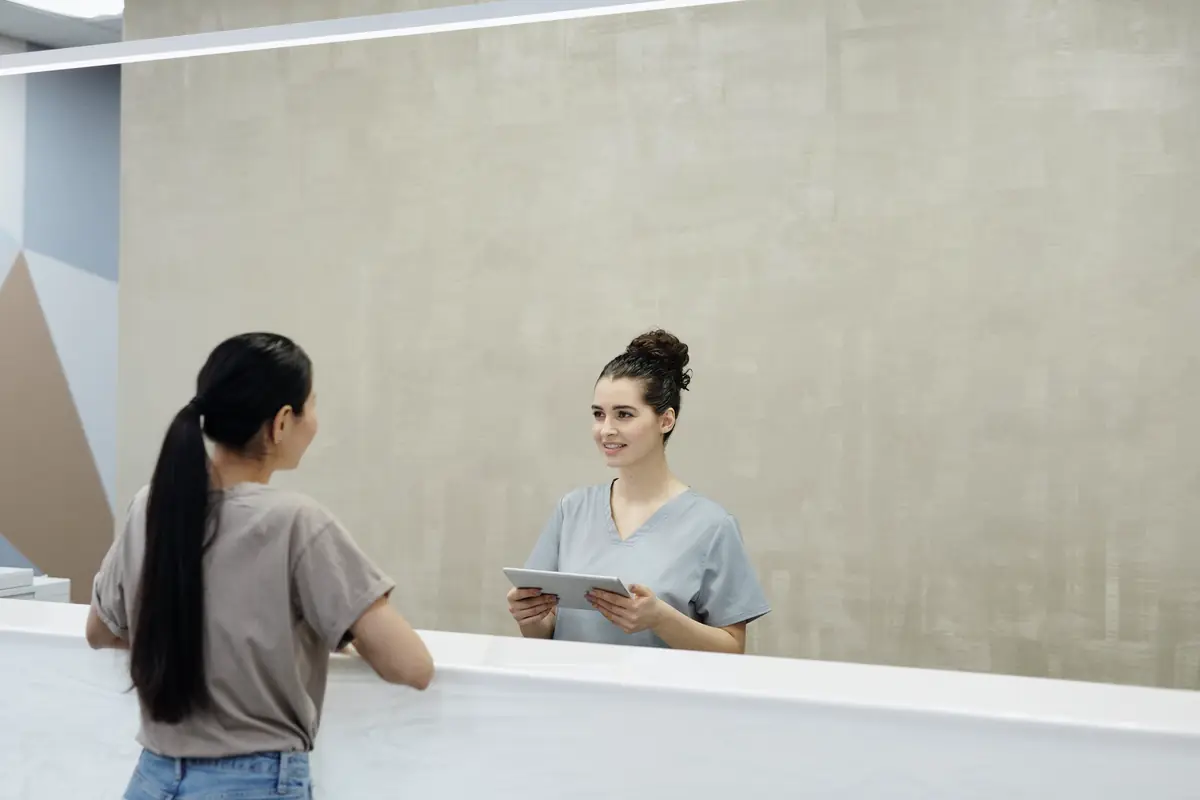
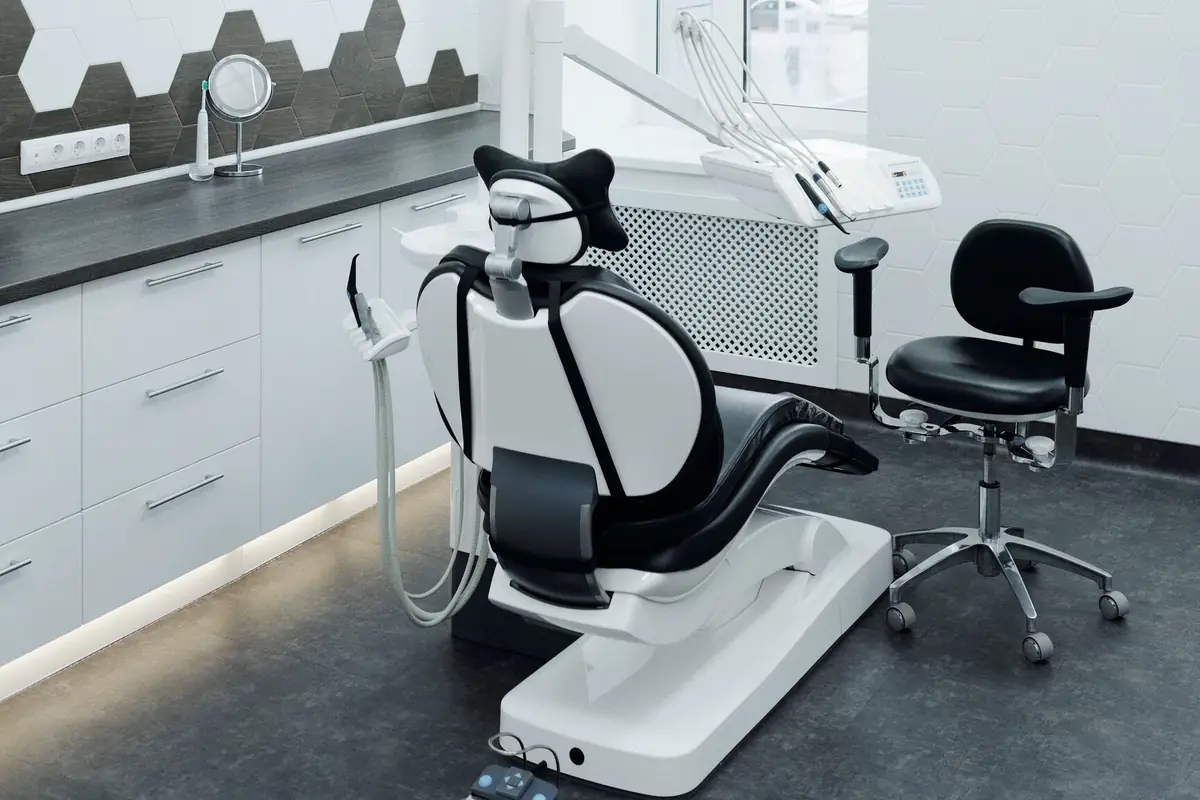
At your first visit we talk sitting down first, in the waiting area or the office, and only then go to the chair. Both treatment rooms have a window, and from the chair you can see the screen with your X-rays.
The building has a lift to the 2nd floor. If you need help getting here, tell us when you book.

How we clean the instruments
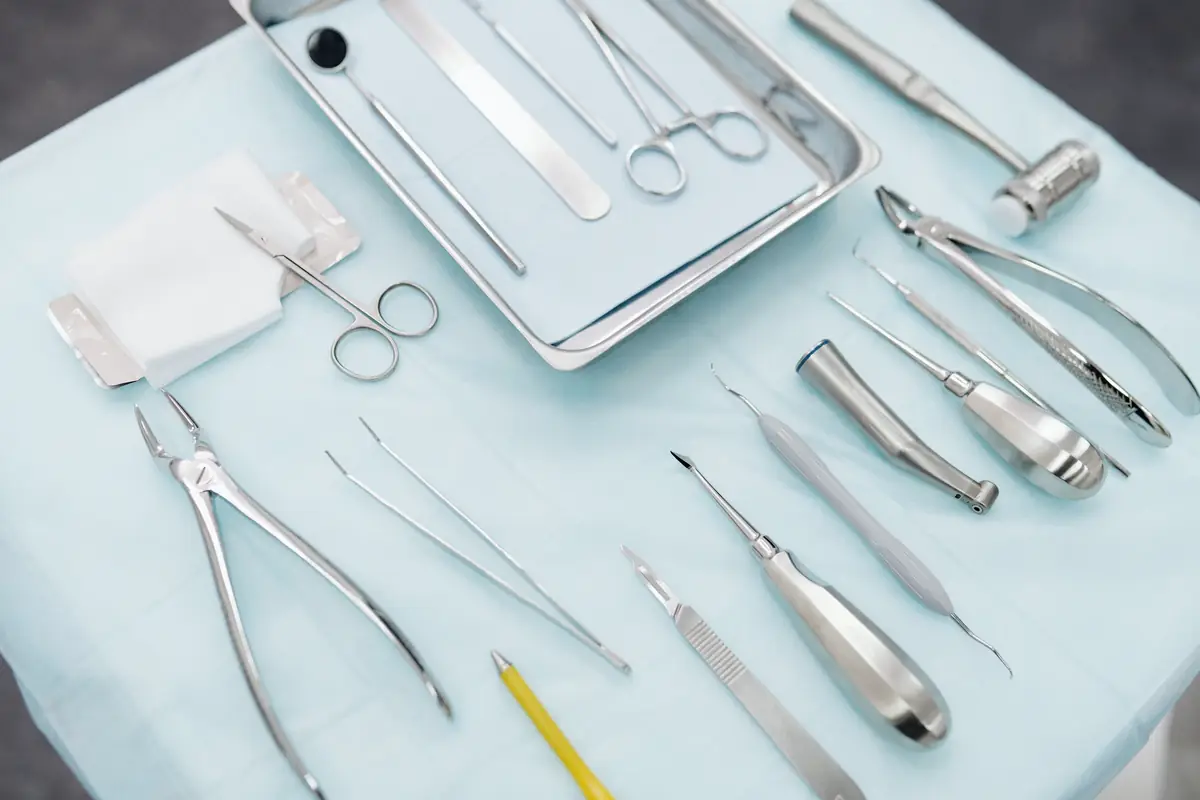
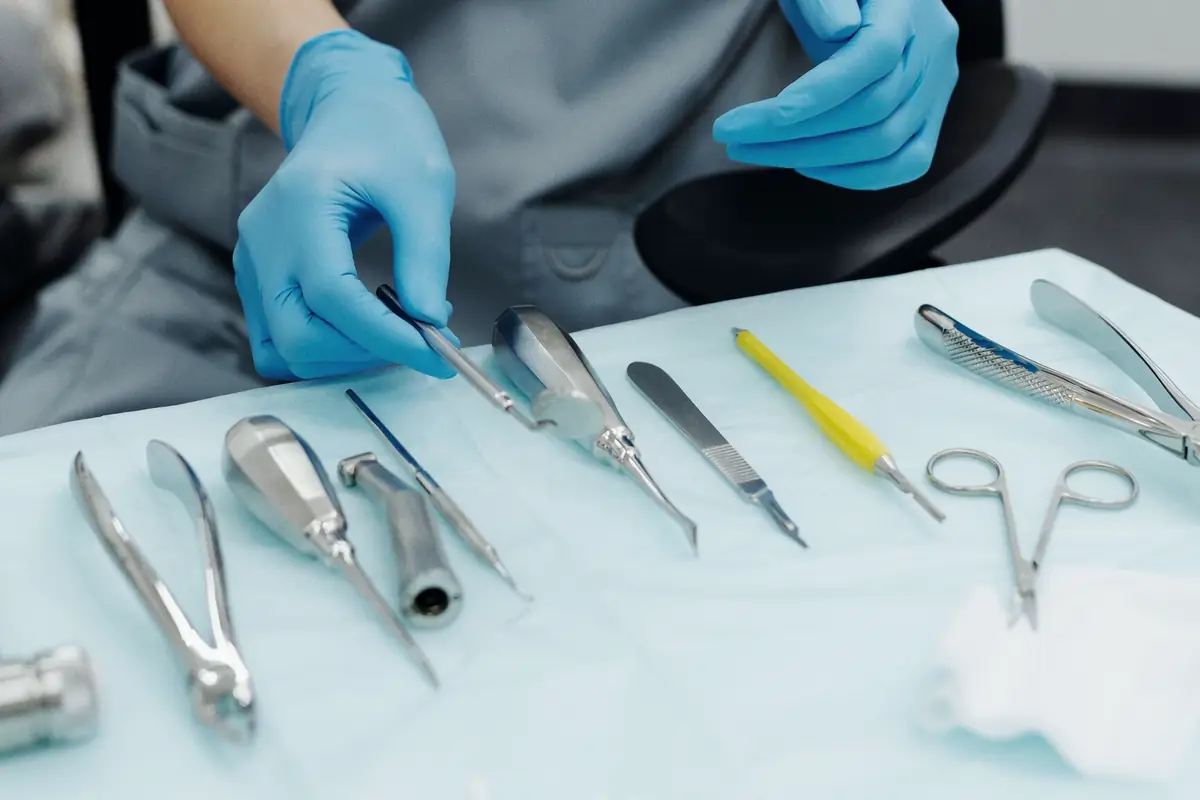
Every instrument that goes in your mouth is first cleaned in an ultrasonic cleaner, then sealed in a pouch and sterilised with steam in an autoclave. So are the handpieces, such as the drill, after every patient. We open the pouch in front of you; if it is torn or wet, the instrument goes through the whole process again.
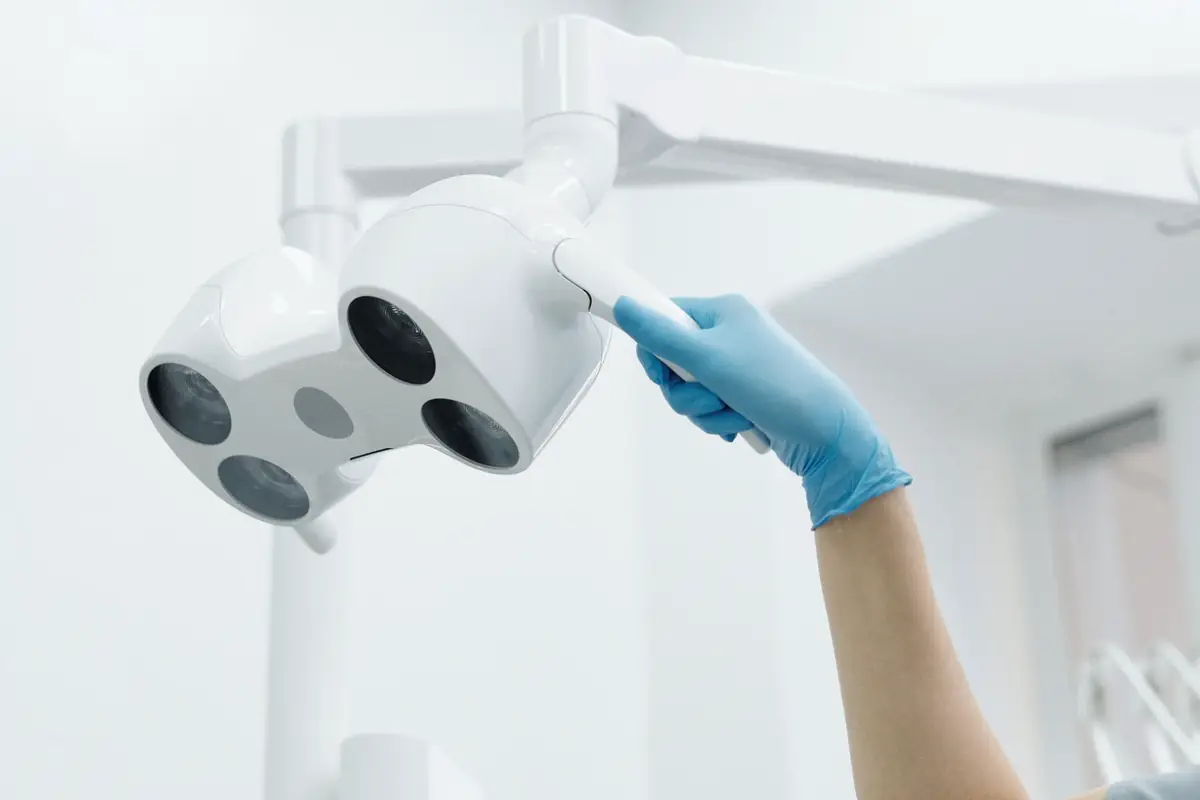
Anything single-use, such as needles, gloves and cups, is thrown away after you. The parts we touch, such as the light handle and the switches, are covered with film that we change for every patient, and the other surfaces are disinfected.
The autoclave is checked on every cycle, from its readings and with an indicator that changes colour, and once a week with a biological indicator. We keep a record of every cycle. If you would like to see the sterilisation room, just ask.
Sources: CDC, Sterilization and Disinfection (Dental Infection Prevention and Control)
X-rays
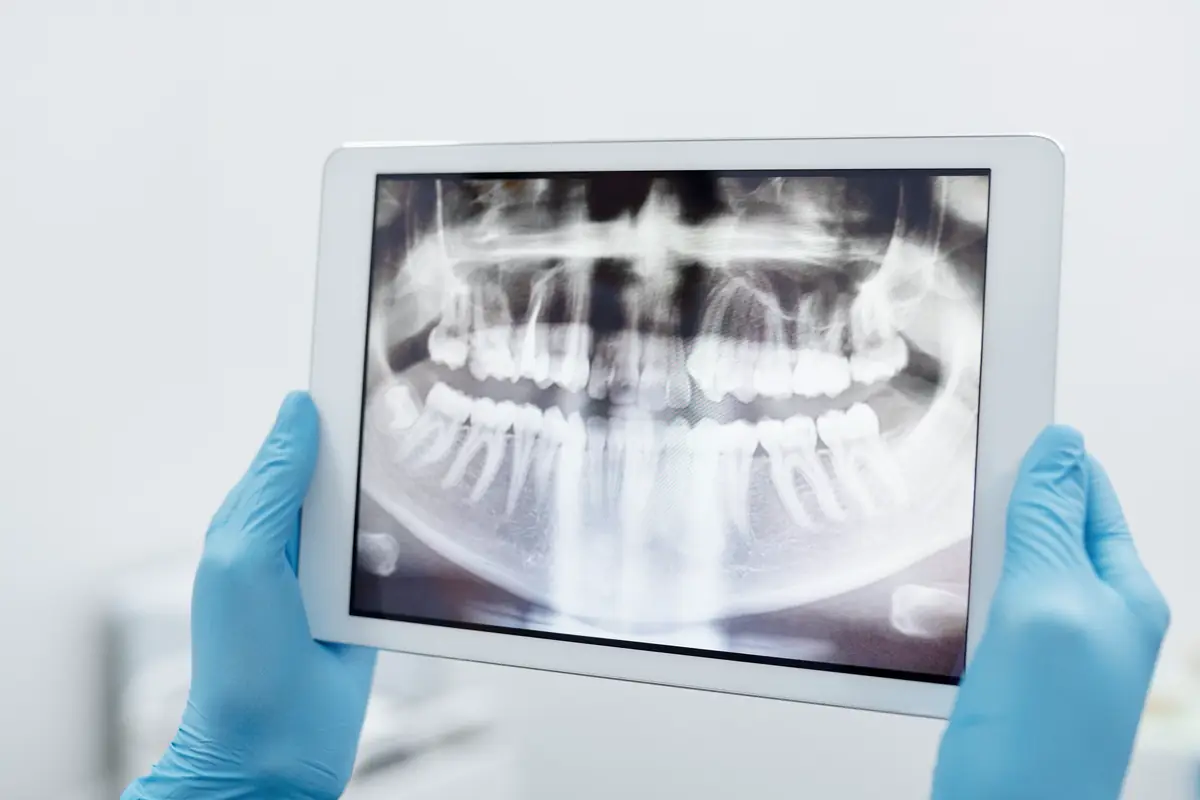
Our X-rays are digital: we look at them together on the screen straight away, and we'll send them to you if you ask. We only take them when we need them to see what is wrong or to plan your treatment.
A small dental X-ray gives about 0.005 mSv, the radiation we all get from our surroundings in one day. A panoramic X-ray, the whole mouth in one picture, gives about 0.025 mSv, the same as three days.
If the light over the chair bothers you, say so: we keep sunglasses next to you.
Why it is called Smalto
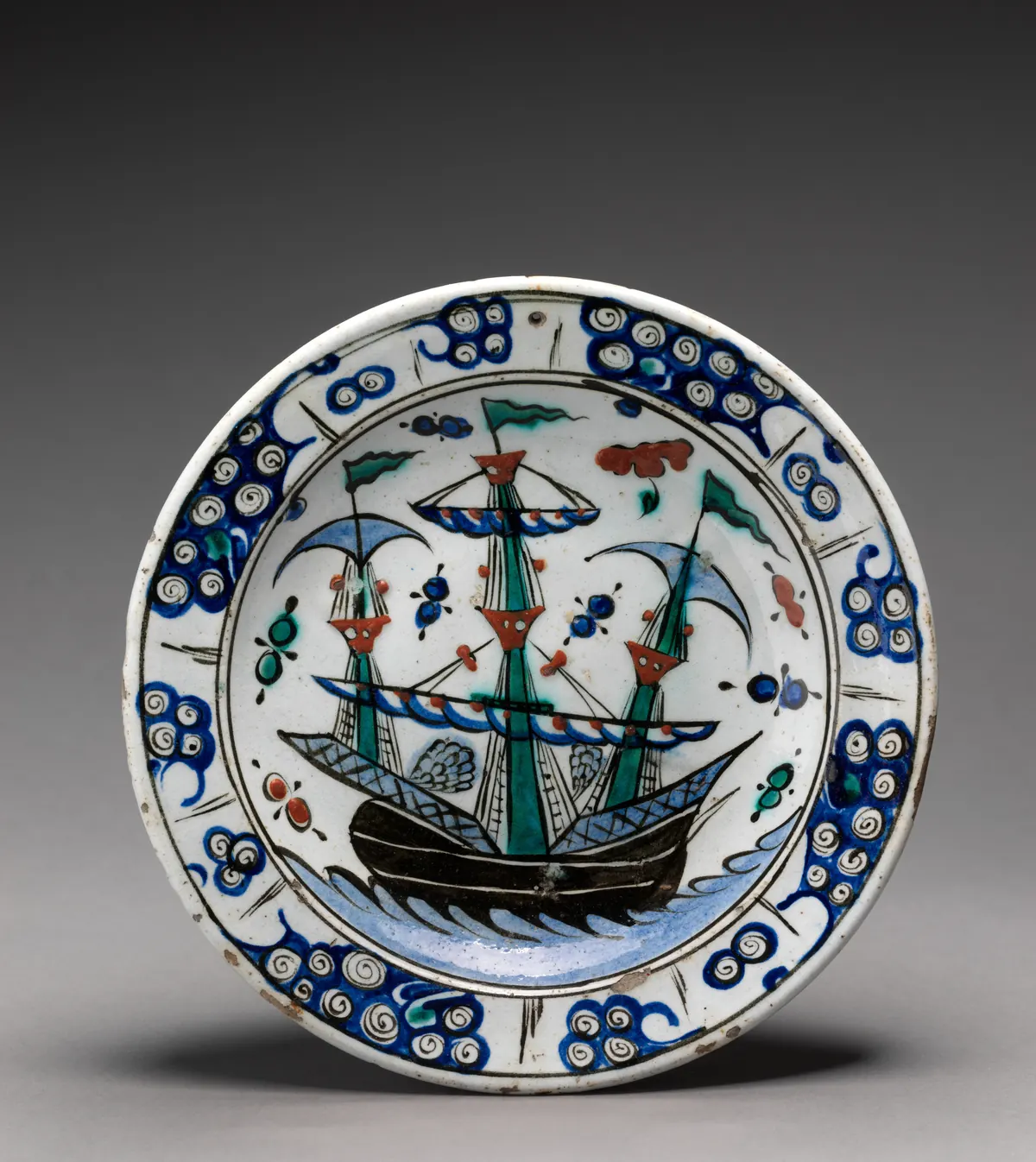
In the captains' houses of Lindos, the wall facing the door was covered in rows of plates. The Lindian captains brought them home from their voyages, from the 17th to the 19th century, and they were the household's luxury goods.
The plates were not made on Rhodes. They were made in Iznik, the Byzantine Nicaea, from the late 16th to the first half of the 17th century. Because so many turned up on the island, 19th-century European collectors called them “Rhodian ware”, and later the Italians believed they were local.
Their colours are painted under a clear glaze. In Greek, glaze is also called smalto, the same word as tooth enamel. That is where the name comes from, and the plate we drew for the home page.
Sources: The ceramic dowry of Rhodes (Kathimerini, in the Athens College Library), Wikipedia, Iznik pottery: Provenance, The Met, Dish with Sailing-Ship Design, 66.4.4