Dental implants
An implant is a small titanium screw placed in the jawbone where a tooth is missing.
- Visits
- Several, over a number of months
- Last updated
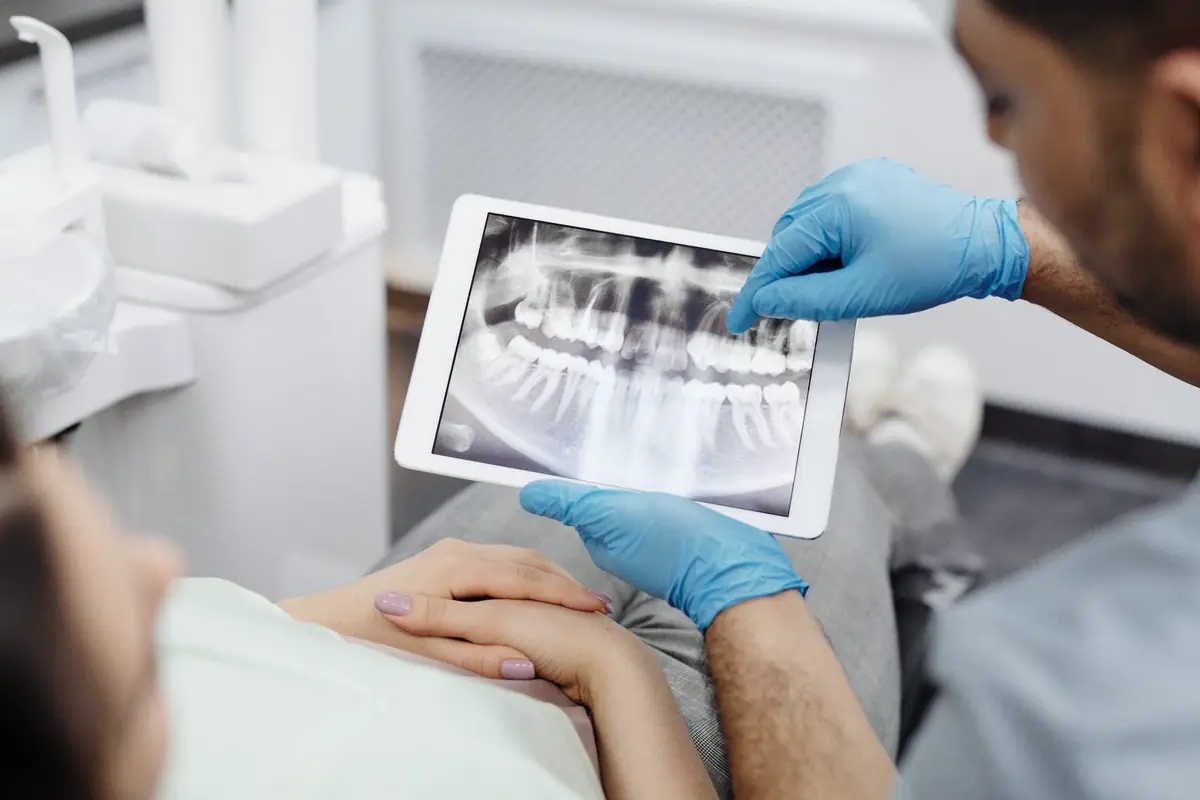
What it is
An implant first heals into the bone, and then a new tooth is fixed on top of it. You need good general health and oral hygiene, with no active decay or infection, and enough bone; otherwise you may need a bone graft, which adds at least four months.
Implants fail much more often in smokers: Cambridge University Hospitals ask you to stop smoking at least six months before. They allow at least one year from start to finish.
An implant is not the only way to replace a tooth: there are also bridges and dentures, and we talk them through with you. Before we start, you get a clear plan: each stage, and what it costs.
How it is done
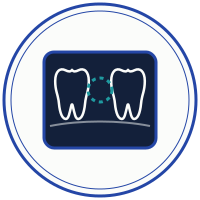
Tests and a plan
X-rays, sometimes a CT scan, and moulds. From these we see the bone and make the plan.
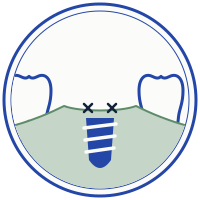
We place the implant
We numb the gum, place the screw in the bone, and the gum is closed over it with stitches.
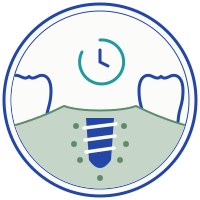
It heals into the bone
The implant heals in the bone. This usually takes 3 to 6 months, but can be longer.
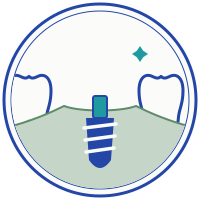
The connector above the gum
If treatment is in two stages, a second small procedure under local anaesthetic brings the top of the implant above the gum. In one stage, this is not needed.

The new tooth
We take a mould, the false tooth is made and fixed on the implant. Sometimes the tooth goes on the same day.
How long it lasts
According to Cambridge University Hospitals, over 90 in 100 implants bond with the bone, and 80 to 95 in 100 last 15 years in people with healthy mouths; with gum disease, 80 to 85 in 100 last 7 years. Occasionally one does not bond and has to be removed. The tooth on top wears over time and may need replacing. No implant is certain to last a lifetime.
What you will feel
You should not feel any pain during the surgery. For the first few days after placement some discomfort and swelling is normal; simple painkillers are usually enough. Rarely, the feeling in the area around it can change.
Afterwards
- We check the stitches and the healing after about a week.
- If you wear a denture, you may not be able to wear it for a few days.
- An implant needs very careful cleaning every day, including with interdental brushes.
- Check-ups every 3 to 6 months. If plaque builds up around the implant, it can cause inflammation (peri-implantitis).
- Call us if the gum around the implant is red, swollen or sore, if it bleeds or there is pus, or if the implant feels loose.
Where the steps come from
The steps and the aftercare on this page follow these patient information pages.