Root canal treatment
Root canal treatment removes an infection from inside a tooth; then the tooth is cleaned, filled and sealed.
- Visits
- From 2, 1 to 2 hours each
- Last updated

What it is
In the middle of each tooth is the pulp, with its nerve and blood supply. Infection reaches it through tooth decay, gum disease, or a chipped or cracked tooth, and it can cause an abscess. It will not heal on its own.
Signs: pain when you chew or touch the tooth, pain that spreads to your jaw or face, swollen gums or a pimple on the gum, a tooth that has darkened or feels loose.
We remove the infected pulp, clean the tooth and fill it. Without this, the tooth may need to be taken out. It usually takes 2 or more appointments of 1 to 2 hours each, with a temporary filling in between.
How it is done
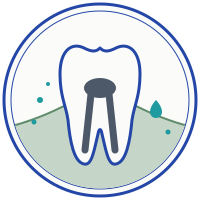
We numb the tooth
With a local anaesthetic. You are awake throughout, but you will not feel any pain.
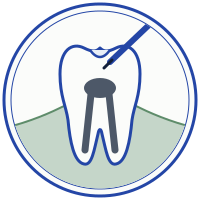
We make a small opening
At the top of the tooth, to reach the pulp.
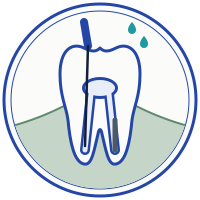
We remove the infected pulp
With fine instruments, from the middle of the tooth and the root canals. If there is an abscess, we drain it.
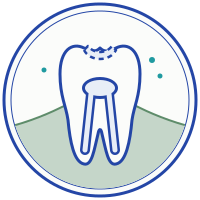
We clean and shape
We clean the inside of the tooth and shape it for the filling. If treatment continues at another appointment, we put in a temporary filling.
We fill and seal the tooth
We fill the inside of the tooth and seal it. If the tooth was badly infected, it may also need a crown.
How long it lasts
On average, a root-filled tooth lasts 5 to 10 years, and many last much longer with good care. It can still decay, though. Without a living nerve the tooth becomes more brittle and breaks more easily; if a filling will not be strong enough to hold it, we suggest a crown.
What you will feel
Once the tooth is numb, it feels much like a filling: you are awake and may feel pressure, but you will not feel any pain. It is a longer appointment, though. If you want a break or feel pain, raise your hand: we stop straight away.
Afterwards
- Your jaw and face stay numb for a few hours. Be careful not to bite your lip or cheek.
- The area may be swollen and sore; it should get better within a couple of weeks.
- For the pain you can take paracetamol or ibuprofen, as the leaflet in the pack says.
- Eat soft food for a few days, and do not chew on that tooth until it has been finally sealed.
- Be careful not to bump or knock your mouth. Brush after meals, clean between your teeth once a day, and do not smoke: it slows healing.
- We will book a follow-up, and then you carry on with your routine check-ups.
- If the pain gets worse or throbs instead of easing, call us.
Where the steps come from
The steps and the aftercare on this page follow these patient information pages.